
Last Updated: November 15, 2026
Quick Summary
Restaurant liability coverage gaps usually come from standard policies built for dine-in service, not from bad policies. The most common gaps are liquor liability, delivery auto exposure, equipment breakdown, food spoilage sublimits, cyber incidents and business interruption with the wrong trigger language. Audit every revenue stream and operational change against your exclusions before a claim finds the gap.
- General liability forms almost always exclude liquor liability, the most common gap in full-service restaurants.
- Products-completed operations coverage handles foodborne illness claims but shares the general liability aggregate.
- Personal auto policies often exclude delivery for pay, even for W-2 employees using their own cars.
- Sublimits quietly cap spoilage, equipment breakdown, cyber and employee dishonesty far below the headline limit.
- An umbrella requires underlying limits that match what you actually carry or a gap opens.
Table of Contents
- Why Restaurant Liability Coverage Gaps Happen
- Restaurant Insurance Coverage Exclusions That Catch Owners Off Guard
- Restaurant Food Poisoning Insurance Coverage and Foodborne Illness Claims
- Restaurant Liquor Liability Insurance: What General Liability Leaves Out
- Policy Limits, Sublimits and Umbrella Coverage
- Restaurant Insurance Coverage Checklist for a Gap Audit
- Modern Operating Models and the Gaps They Create
- Walking Through Your Policy With a Specialist
- Frequently Asked Questions
Why Restaurant Liability Coverage Gaps Happen
Most restaurant owners don’t discover a coverage gap until they file a claim and hear “excluded.” Restaurant liability insurance coverage gaps to avoid rarely come from buying a bad policy, they come from buying one never built for how the restaurant actually operates.
Owners often add a delivery app, open a patio bar, or start catering weddings, and the policy stays frozen at the day it was written.
Three forces create most gaps:
- Form language. Standard policy forms define coverage narrowly.
- Underwriting assumptions. Your premium was priced on what you told the carrier at inception, not what you’re doing now.
- Silent changes. Equipment ages, menus change, and staff turn over, but the declarations page doesn’t.
The fix starts with understanding where standard forms stop paying.
Restaurant Insurance Coverage Exclusions That Catch Owners Off Guard
Restaurant insurance coverage exclusions are the specific situations a policy lists as not covered, and they matter more than the coverage summary an agent quotes over the phone. A policy can look comprehensive on the declarations page and still exclude the exact event that shuts your dining room for a month.
Common Exclusions in Standard Commercial Policies
Standard commercial policies routinely exclude or heavily restrict several exposures that are ordinary in food service:
- Liquor liability, which almost every general liability form excludes outright.
- Employee injury, which belongs to workers’ compensation, not general liability.
- Pollution and contamination in some forms, touching food spoilage and certain cleanup costs.
None of these are tricks. They’re standard boundaries. The problem is that owners assume “restaurant insurance” means all of it.
Restaurant Food Poisoning Insurance Coverage and Foodborne Illness Claims
Restaurant food poisoning insurance coverage is the part of a liability policy that responds when a customer gets sick from food you served and files a claim.
That’s the good news. The complications are elsewhere.
Foodborne illness claims are expensive to defend even when you’re right: multiple claimants, medical documentation, health department records, and months of investigation.
What most guides miss is documentation.
Watch out: owners often assume their policy covers lost business from a voluntary closure after a contamination scare.
Restaurant Liquor Liability Insurance: What General Liability Leaves Out
Restaurant liquor liability insurance is commonly used to cover claims arising from serving, selling, or furnishing alcohol, and general liability often excludes them.
The exposure isn’t limited to drunk driving incidents. Dram shop laws in many states let injured third parties pursue the establishment that served an obviously intoxicated patron.
Coverage typically needs to be added as a separate policy or specific endorsement, and it usually comes with conditions: staff training requirements, service cut-off procedures, and ID verification practices.
state dram shop liability laws and alcohol service requirements vary considerably, which is why the coverage needs to be matched to where you operate. For a deeper look at how this coverage is structured, see our guide to liquor liability insurance for restaurant owners.
Policy Limits, Sublimits and Umbrella Coverage
Policy limits are the maximum a carrier will pay; sublimits are smaller caps buried inside the policy for specific categories of loss. A general liability policy might show a $1 million per-occurrence limit, then quietly cap certain claims far below it.
General liability is usually written on an occurrence basis with a per-occurrence limit and a general aggregate for all claims in the policy period.
Where Sublimits Quietly Cap Your Protection
Sublimits commonly apply to:
- Spoilage of perishable stock after a refrigeration failure
- Equipment breakdown, often excluded from property and needing its own coverage
- Water damage from certain sources
The practical effect: you believe you have a million dollars of protection, and a specific loss is capped at a fraction of that. A small spoilage sublimit may not replace a full walk-in of perishable stock. A cyber sublimit that covers notification costs but not card-network assessments leaves the largest bill with you.
How to Size Limits Without Guessing
Limits are often set once at inception and never revisited. Size each limit against a realistic worst case rather than a round number:
- General liability. Estimate defense costs plus a serious injury claim.
- Products-completed operations. Consider a multi-claimant foodborne illness event, where several customers file and the health department investigation adds cost.
- Liquor liability. Dram shop claims involving catastrophic injury can exceed primary limits quickly; many carriers write liquor limits separately from general liability.
Watch out: a limit that matches your revenue is not the same as a limit that matches your exposure. A single catastrophic claim can exceed annual revenue, and the policy will not pay past its stated cap no matter how large the loss.
How Umbrella Coverage Attaches
An umbrella policy sits above your underlying limits and responds when a claim exhausts them. It is not a substitute for primary coverage; it usually requires you to maintain specified underlying limits, and it may drop down to cover certain exposures your primary policy excludes, depending on the form.
Two details decide whether the umbrella actually helps. First, confirm the umbrella’s schedule of underlying policies matches what you actually carry; a mismatch can create a gap between the primary limit and where the umbrella begins. Second, check whether the umbrella follows form for liquor, auto, and employer liability, or whether those exposures need to be scheduled separately. If you want to see how that layer works, our team can walk you through commercial umbrella insurance options.
Restaurant Insurance Coverage Checklist for a Gap Audit
A restaurant insurance coverage checklist is a structured list of the exposures your operation actually carries, matched against the coverage your policy actually provides.
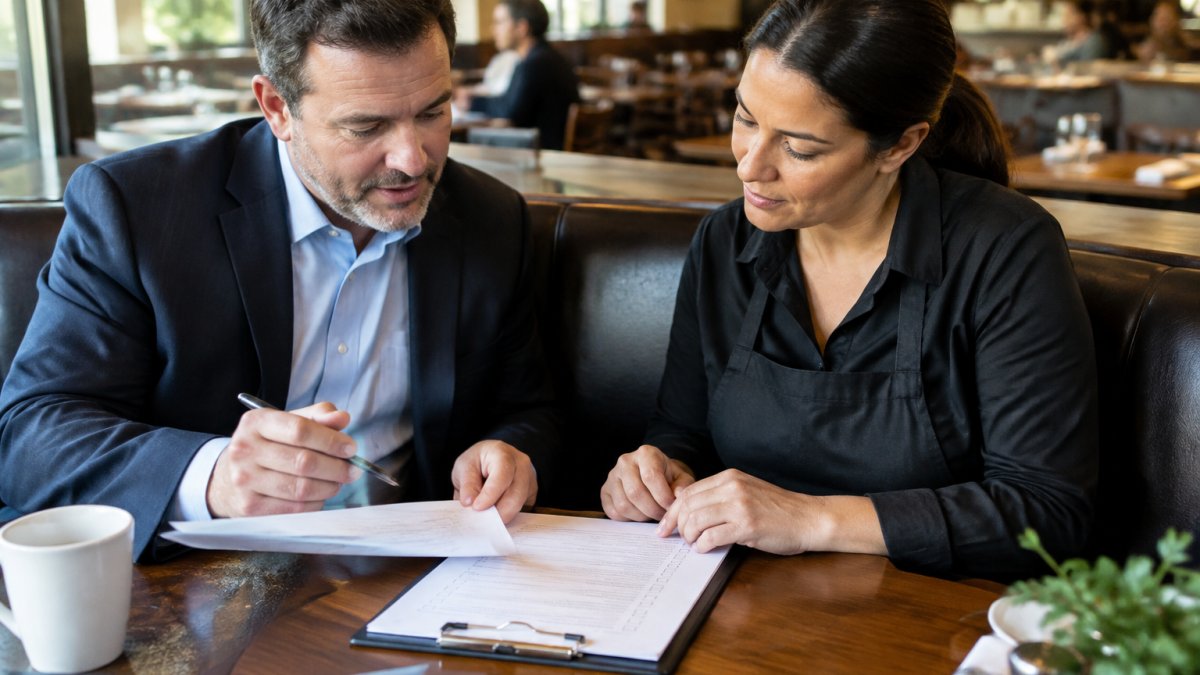
Work through it in this order:
- List every revenue stream: dine-in, takeout, delivery, catering, events, retail products, alcohol
- List every vehicle used for the business, owned or personal
- Confirm general liability limits and the products-completed operations aggregate
| Coverage Area | Common Gap | What It Costs You |
|---|---|---|
| Liquor liability | Excluded from general liability | Defense and damages paid out of pocket |
| Equipment breakdown | Excluded from property | Compressor replacement and lost stock |
| Food spoilage | Low sublimit | Inventory loss above the cap |
| Business interruption | Wrong trigger language | Lost income after a shutdown |
| Cyber | No coverage or tiny sublimit | Breach response and card network costs |
| Delivery auto | Personal auto used for business | Denied claim after an accident |
If you want a more detailed method for working through this, our article on identifying business insurance coverage gaps walks through the process step by step.
Modern Operating Models and the Gaps They Create
Delivery-first kitchens, ghost kitchens, and third-party app partnerships have changed restaurant risk faster than standard policy forms have adapted. A kitchen built for dine-in that pivots to 70% delivery has different exposures: more drivers, more time on the road, more food sitting in transit, and more payment data moving through apps. The gap isn’t that insurers refuse to cover these models, it’s that the policy language was written for a dine-in operation and does not automatically stretch to cover the new activity.
Delivery and the Auto Exposure
Consider what changes when you add delivery:
- Commercial auto. If drivers use personal vehicles for business delivery, a personal auto policy may exclude the claim. Personal auto forms often exclude delivery for pay, even when the driver is a W-2 employee using their own car.
- Hired and non-owned auto. This endorsement covers vehicles you don’t own but use for business. Restaurant policies vary in whether they include this endorsement, and its limits may be lower than the cost of a serious accident.
- Third-party app drivers. When a platform’s drivers deliver your food, the platform’s coverage may respond first, but the boundaries between platform coverage and yours are set by contract and policy wording. Read the platform agreement for the indemnity and insurance provisions.
Ghost Kitchens, Shared Spaces, and Off-Premises Operations
A ghost kitchen or shared kitchen arrangement changes who controls the space and who is responsible for what. Standard property and general liability forms often assume you occupy and control your premises.
Catering and private events add another layer. Off-premises service moves your operation into spaces you don’t control, and some policies restrict or exclude off-premises liquor service and event liability.
Cyber and Payment-System Exposure in Detail
Every app and online ordering system is a data touchpoint. Payment card incidents and guest data breaches are commonly excluded from property and general liability, and the exposure can be larger than owners often assume:
- Point-of-sale and payment-card data. A breach at the POS can trigger card-network assessments, forensic investigation costs, and notification obligations.
- Ransomware. A ransomware event can lock ordering systems and reservation platforms, both a data event and a business interruption event.
- Privacy response. Notification, credit monitoring, and legal review costs add up quickly, and a small cyber sublimit may cover only part of them.
Outdoor Dining and Pop-Ups
Outdoor dining, sidewalk seating, and pop-up stalls change the premises your policy describes. A patio that extends beyond the leased footprint may not be covered as part of the scheduled location, and temporary structures, heaters, and tents may fall under separate property or liability treatment.
The pattern is consistent: your operation changed, and the policy didn’t. When your delivery mix, catering volume, physical space, or payment systems change, that’s the moment to revisit coverage. Our guide on when to update your business insurance policy covers the triggers worth watching.
Walking Through Your Policy With a Specialist
Reading a policy alone is where many owners stall. The declarations page is readable; the forms behind it are often harder to interpret.
Bring three things to that conversation: your current declarations page, a list of every revenue stream and vehicle, and a note of anything that changed since the policy started. The goal isn’t to buy more coverage. It’s to close the gaps that matter and stop paying for coverage you’ll never use.
Before that meeting, it helps to know what the current baseline requirements look like. Our guide to meeting restaurant liability insurance coverage requirements covers what to check against your policy.
Many restaurant owners suspect they’re underinsured but don’t have the time to map every exposure against every exclusion. A specialist review can help.
Frequently Asked Questions
What is typically excluded from restaurant liability insurance coverage?
Standard restaurant liability policies commonly exclude liquor liability, employee injuries, intentional acts, pollution, and damage from wear and tear or faulty workmanship. Food contamination and spoilage may be sublimited or excluded unless you add an endorsement. Cyber incidents and data breaches are usually excluded from general liability entirely. Review your restaurant insurance coverage exclusions line by line with your agent, because the exclusions section is where most coverage gaps hide.
Does general liability insurance cover food poisoning claims?
General liability may respond to a customer injury claim arising from foodborne illness, but coverage is not guaranteed. Many policies treat food contamination as a separate exposure, and some carriers sublimit or exclude it. Restaurant food poisoning insurance coverage often requires a specific endorsement or a standalone policy. Confirm in writing that your policy responds to foodborne illness claims, and check whether the limit is high enough for multiple claimants from a single incident.
Does restaurant liability insurance cover employee injuries?
No. Employee injuries fall under workers’ compensation, which is a separate policy. General liability typically excludes injuries to employees. Employer liability coverage, often attached to the workers’ comp policy, can handle claims employees bring against the business outside the workers’ comp system. If you have kitchen staff, delivery drivers or part-time servers, confirm your workers’ comp and employer liability limits match your payroll and headcount.
Does liability insurance cover liquor-related claims?
General liability almost never covers liquor-related claims. Restaurant liquor liability insurance is a separate policy or endorsement that responds when a customer is injured or causes harm after being served alcohol. Some jurisdictions may require it if you serve alcohol on premises. If you host private events, offer BYOB service or run a bar program, confirm your liquor liability limit and whether it covers off-premise catering and special events.
How can restaurant owners identify gaps in their insurance coverage?
Start with a restaurant insurance coverage checklist that maps every exposure to a specific policy, limit and endorsement. Walk through liquor service, food handling, delivery operations, equipment, cyber and employee risks one by one. Then read the exclusions section of each policy and compare it to your actual operations. A licensed insurance professional can help run this review and flag where a sublimit, exclusion or missing endorsement leaves you underinsured.
What happens if a restaurant is underinsured after a claim?
The business pays the difference out of pocket. If a judgment exceeds your policy limit, your personal or business assets are exposed. A single foodborne illness outbreak or kitchen fire can produce claims well above a standard general liability limit. That is why umbrella coverage matters: it sits above your primary policies and responds when a claim exceeds the underlying limit. Review limits annually as revenue, payroll and seating capacity grow.
