

Last Updated: November 2, 2026
Quick Summary
Only some restaurant liability insurance is legally required in 2026: workers’ compensation is a statutory mandate in nearly every state, while liquor liability may be a statutory mandate or a condition of your liquor license depending on your state. General liability, property, and business interruption are typically contract conditions set by landlords or lenders rather than state law.
- Workers’ comp applies once you have any employee on payroll, including part-time and seasonal staff.
- A landlord’s certificate of insurance request is a contract condition, not a legal mandate.
- General liability usually excludes alcohol claims, so you need a separate liquor liability policy or endorsement.
- Match general liability limits to your largest contract requirement, then stress-test against a realistic worst-case claim.
- Claims-made policies carry a retroactive date that can exclude incidents occurring before that date.
Table of Contents
- Restaurant Liability Insurance Coverage Requirements in 2026: What Is Actually Mandatory
- Restaurant Insurance Requirements: A State-by-State 2026 Matrix
- Restaurant General Liability Insurance: Customer Injury and Third-Party Claims
- Workers’ Compensation, Employer’s Liability, and Employment Practices Coverage
- Restaurant Liquor Liability Insurance: Alcohol-Related Claims and License Rules
- Property, Business Interruption, and Cyber Coverage for Modern Operations
- Restaurant Insurance Cost in 2026: What Drives Your Premium
- Coverage Limits, Exclusions, and Claims-Made vs. Occurrence Policies
- Frequently Asked Questions
Restaurant Liability Insurance Coverage Requirements in 2026: What Is Actually Mandatory
Most restaurant owners assume a single policy covers everything. It doesn’t, and that gap is where good businesses get hurt.
Here’s the part that trips people up. The rules vary wildly by state, by landlord, and by liquor license terms.
Restaurant liability insurance is the umbrella term for policies that shield a food service business from claims involving customer injuries, employee injuries, property damage, and alcohol-related incidents.
Legal Mandates vs. License Conditions vs. Prudent Recommendations
Not all “requirements” carry the same weight. Sorting them correctly saves money and headaches.
- Legal mandates: Rules set by state law. Workers’ compensation is the clearest example in nearly every state.
- License conditions: Requirements tied to a permit. Liquor liability coverage often rides on your liquor license.
- Prudent recommendations: Coverage no one forces on you but that protects your assets. General liability and business interruption live here for many operators.
A common mistake is treating a landlord’s certificate of insurance request as the same thing as a legal mandate. They’re different, and they carry different consequences if ignored.
Restaurant Insurance Requirements: A State-by-State 2026 Matrix
No single national rule governs restaurant insurance requirements. Each state sets its own workers’ comp rules, liquor liability thresholds, and license conditions, and those rules change, sometimes annually. The matrix below is a general starting point, organized by the three categories that determine whether a policy is mandatory: statutory mandates, license conditions, and contract conditions. Verify every row against your state’s insurance department, workers’ comp board, and liquor control board before you renew.
| Requirement | Category | Typical 2026 Trigger | Where to Verify |
|---|---|---|---|
| Workers’ compensation | Statutory mandate (nearly all states) | Any employee on payroll, including part-time and seasonal staff | State workers’ comp board or industrial commission |
| Liquor liability | Statutory mandate or license condition (varies) | Serving or selling alcohol under a license | State liquor control board / ABC |
| General liability | Contract condition (lease or lender) | Signing a commercial lease or closing a business loan | Landlord, lender, or franchise agreement |
| Commercial property | Contract condition (lender) | Business loan, mortgage, or equipment financing | Lender requirements |
| Employer’s liability | Statutory (bundled with workers’ comp in most states) | Same payroll trigger as workers’ comp | State workers’ comp board |
| Commercial auto | Statutory (if vehicles are owned or leased) | Delivery vehicles, catering vans, food trucks | State DMV and insurance department |
| Unemployment insurance | Statutory mandate | Any employee on payroll | State unemployment agency |
| Disability insurance | Statutory in a handful of states | Employees on payroll in those states | State labor or insurance department |
How to Read the Matrix
Statutory mandates are enforced by state agencies with penalties, stop-work orders, or personal liability for officers.
License conditions are enforced by the licensing agency, not the insurance department. Liquor liability is the classic case.
Contract conditions are enforced by the counterparty. A landlord’s certificate-of-insurance requirement is not a law, it’s a lease term. But breaching it can trigger default, and lenders routinely require property and general liability coverage as a loan covenant.
State-Level Patterns to Watch in 2026
- Workers’ comp thresholds. Workers’ comp rules, including coverage thresholds and exemptions, differ by state and should be confirmed with your state’s workers’ comp board. Restaurant owners who misclassify staff as contractors are the most common enforcement target.
- Liquor liability limits. Minimum limits vary widely by state and license class. Limit requirements differ by state and license class. Confirm the current terms with your liquor control board, because they are periodically adjusted.
- Dram shop statutes. These state laws define when a business can be held liable for a patron’s actions after drinking (Commercial host (dram shop) liability: current status and trends). Some states impose liability on the server; others limit it. Your liquor liability policy should be written to match your state’s dram shop framework.
- Commercial auto for delivery. If you operate delivery vehicles, catering vans, or food trucks, check your state’s requirements with your insurer or state insurance department.
The U.S. Department of Labor workers’ compensation overview explains how state systems differ. Treat this matrix as a starting point, not a substitute for checking your own state’s rules, and re-check it at every license renewal.
A certificate of insurance requested by a landlord, lender, or franchisor is a contract condition, not a legal mandate. Ignoring it can breach your lease or loan even though no state agency will cite you.
Restaurant General Liability Insurance: Customer Injury and Third-Party Claims
A customer slips near the kitchen door. Another chokes on a bone. Someone claims your social media ad was misleading. All three fall under restaurant general liability insurance.
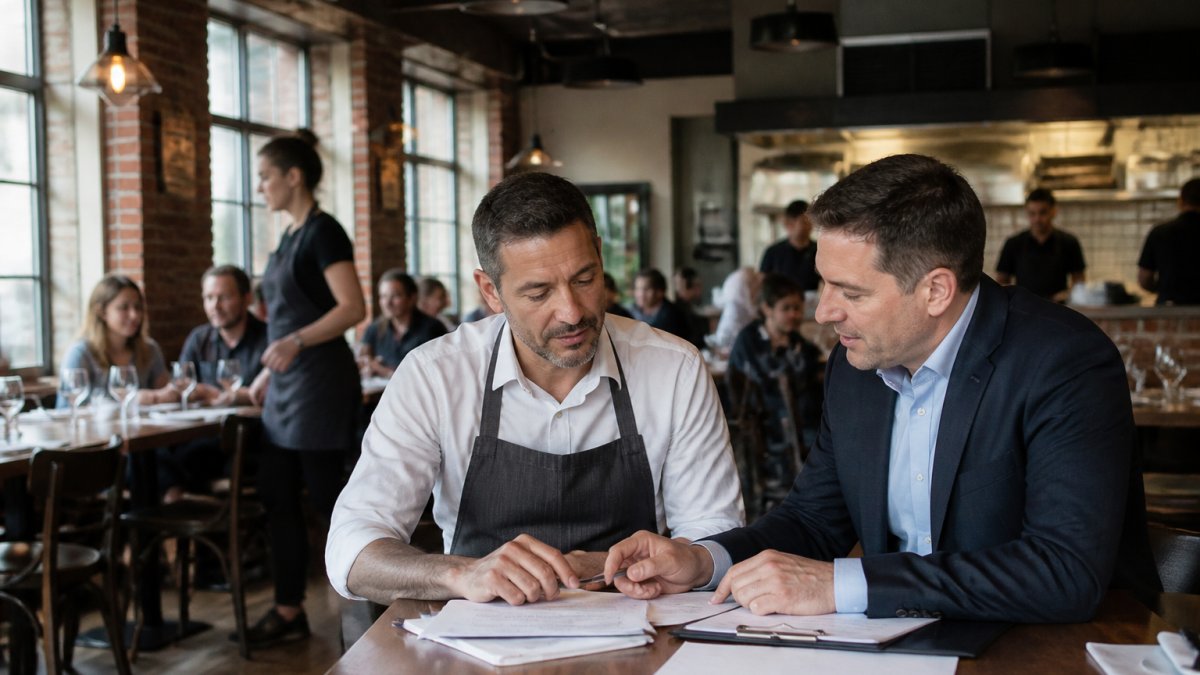
This policy covers third-party bodily injury, property damage, and advertising injury. It pays medical bills, legal expenses, and settlements when a customer sues.
Watch out: skipping general liability because no law requires it leaves your personal assets exposed the moment a customer claim lands.
Workers’ Compensation, Employer’s Liability, and Employment Practices Coverage
Workers’ compensation insurance is the one coverage nearly every restaurant must carry. For a deeper guide to workers compensation insurance for small businesses, see our dedicated article.
Employer’s liability insurance usually rides alongside workers’ comp. It handles lawsuits an employee files beyond the standard comp benefit.
Employment practices liability insurance covers a different risk: claims of discrimination, harassment, or wrongful termination. These claims don’t involve physical injury, which is why they need their own policy.
Restaurant Liquor Liability Insurance: Alcohol-Related Claims and License Rules
Serve alcohol and your risk profile changes overnight. Mitigating these legal exposures requires a comprehensive approach to operational hazards, much like the rigorous standards maintained through proper restaurant fire safety.
Liquor liability requirements are set at the state level and may be a condition of your liquor license. Confirm the current terms with your state liquor control board before your renewal.
Dram shop laws vary too. These state laws decide when a business can be held responsible for a customer’s actions after drinking.
Property, Business Interruption, and Cyber Coverage for Modern Operations
Fire, theft, and equipment breakdown hit the physical side of the business. Commercial property insurance covers your building contents, kitchen equipment, and inventory.
Business interruption insurance replaces lost business income when a covered event shuts you down. It covers the gap between the disaster and reopening.
Cyber liability insurance matters more than it used to. Point-of-sale systems, online ordering, and reservation platforms all hold customer data. A breach brings legal expenses and notification costs.
Restaurant Insurance Cost in 2026: What Drives Your Premium
Restaurant insurance cost depends on several factors. Pricing depends on your operation’s details, and current pricing is best confirmed through a quote.
- Revenue and payroll: Higher sales and staff counts raise exposure.
- Menu and alcohol service: Bars and full liquor service cost more to insure.
- Location and building age: Older buildings and high-traffic areas raise property risk.
- Claims history: Prior lawsuits push premiums up.
- Coverage limits and deductibles: Higher limits cost more; higher deductibles cost less.
For current pricing for your own operation, visit BIG Insurance’s website to request a quote.
Coverage Limits, Exclusions, and Claims-Made vs. Occurrence Policies
Your coverage limit is the most your policy pays for a single claim. The per-occurrence limit caps one incident. The aggregate limit caps the total across the policy year. Pick limits that match your real exposure, not the cheapest option on the page.
How to Select Limits
Restaurant general liability policies are commonly written on a per-occurrence and aggregate structure. The right numbers depend on three variables:
- Venue size and customer volume. A high-turnover dining room with a busy bar and weekend crowds carries more slip-and-fall and altercation exposure than a small counter-service operation.
- Alcohol sales as a share of revenue. The higher the percentage, the more you should lean on liquor liability limits, which are often set separately from general liability.
- Contract requirements. Leases, lender covenants, and franchise agreements frequently specify minimum limits. Read those clauses before you shop, because buying below the required limit can breach the contract.
A practical approach is to set general liability limits at or above the highest contract requirement you face, then stress-test against a realistic worst-case claim in your market. If a single customer injury claim could exceed your per-occurrence limit, the gap comes out of your assets.
Exclusions That Decide Restaurant Claims
Every policy has exclusions, and they decide what won’t be paid. Common restaurant exclusions include:
- Alcohol claims. General liability usually excludes liquor liability; you need a separate policy or endorsement.
- Intentional acts. Assault and battery exclusions are common and matter for bars and late-night venues. An endorsement can buy back some of this exposure.
- Employee injuries. These belong to workers’ comp, not general liability.
- Certain food contamination events. Some policies exclude or sublimit claims tied to specific contaminants; read the foodborne illness language carefully.
- Cyber incidents. Data breaches and ransomware are typically excluded from general liability and require a standalone cyber policy.
- Business-use auto. Personal auto policies exclude delivery and catering use.
Endorsements can add some of that back for an extra premium. Common restaurant endorsements include liquor liability, assault and battery, hired and non-owned auto, and additional-insured endorsements requested by landlords or lenders.
Claims-Made vs. Occurrence
An occurrence policy covers incidents that happen during the policy period, even if the claim comes years later. A claims-made policy covers claims reported while the policy is active. Claims-made policies also carry a retroactive date, which sets how far back coverage reaches.
For restaurant owners, the practical difference matters most with employment practices liability and cyber coverage, which are often written claims-made. General liability and liquor liability are typically occurrence-based, but confirm the form before you sign.
Match your limits to your largest contract requirement, then stress-test against a realistic worst-case claim. Read the exclusions before the premium, and confirm whether each policy is occurrence or claims-made, the retroactive date on a claims-made policy can silently erase coverage.
Frequently Asked Questions
What insurance is legally required for a restaurant in 2026?
Workers’ compensation insurance requirements vary by state once you have employees, and commercial auto coverage may be required for delivery vehicles. General liability is not federally mandated, but landlords, lenders, and liquor license boards routinely require it as a condition of your lease or license. Check your state’s rules and your license application, because the specific mandates vary by location and by how you operate.
Is general liability insurance required for restaurants?
No federal law requires restaurant general liability insurance, but that does not mean you can skip it. Commercial leases almost always require a certificate of insurance naming the landlord as additional insured, and liquor license boards may require it too. Even where it is not mandated, one slip-and-fall claim can exceed a small restaurant’s annual profit, so most owners carry it as a core policy.
How much liability insurance should a restaurant carry?
Appropriate limits depend on your lease terms, license conditions, and the value of your assets. Compare any required limits against your contracts before choosing coverage. Compare the limit to your lease requirements, your liquor license conditions, and the value of your assets, then set the deductible at a level you could pay without borrowing.
Does restaurant insurance cover food poisoning claims?
General liability typically responds to third-party bodily injury claims, including alleged foodborne illness, but many policies exclude or sublimit food contamination. Ask specifically about food contamination and spoilage coverage, and confirm whether the policy treats a foodborne illness outbreak as a covered bodily injury claim. Document your food safety procedures, because insurers and claims adjusters will ask for them after a claim.
Coverage gaps rarely announce themselves until a claim arrives. BIG Insurance builds customized policies for food service businesses, from general liability to liquor coverage, with efficient service that respects your time. Our team specializes in personal and business coverage so you get answers, not a sales pitch. Get started with BIG Insurance and protect the business you’ve built.
