

Last Updated: November 12, 2026
Quick Summary
The best way to insure new construction contractors starts with builders risk coverage, which protects the structure, materials, and work in progress until the project is finished. Pair it with general liability and workers’ compensation, and coordinate certificates across every party on site.
- Builders risk coverage should attach before the first delivery of materials to the site.
- A percentage deductible often runs 1% to 5% of the policy limit.
- Standard builders risk forms commonly exclude flood, earthquake, and earth movement unless endorsed.
- Most states require workers’ compensation once you have employees.
- Collect certificates of insurance from every subcontractor before work begins.
Table of Contents
- Builders Risk Insurance Quote: The Foundation of New Construction Coverage
- Contractor General Liability Insurance: Protecting Against Third-Party Claims
- Workers’ Compensation Insurance for Contractors: Covering the Crew
- Contractor Insurance Cost: What Drives Your Premium and How to Manage It
- Comparing Policy Types: Coverage Highlights and Tradeoffs
- Coverage Coordination Among Contractor, Owner, and Subcontractors
- How to Choose an Insurance Provider and Bundle Coverage
- Get a Builders Risk Insurance Quote for Your Next Project
- Frequently Asked Questions
Builders Risk Insurance Quote: The Foundation of New Construction Coverage
The best way to insure new construction contractors starts with builders risk coverage, a policy that protects a building under construction from fire, theft, vandalism, and weather damage until the project is finished.
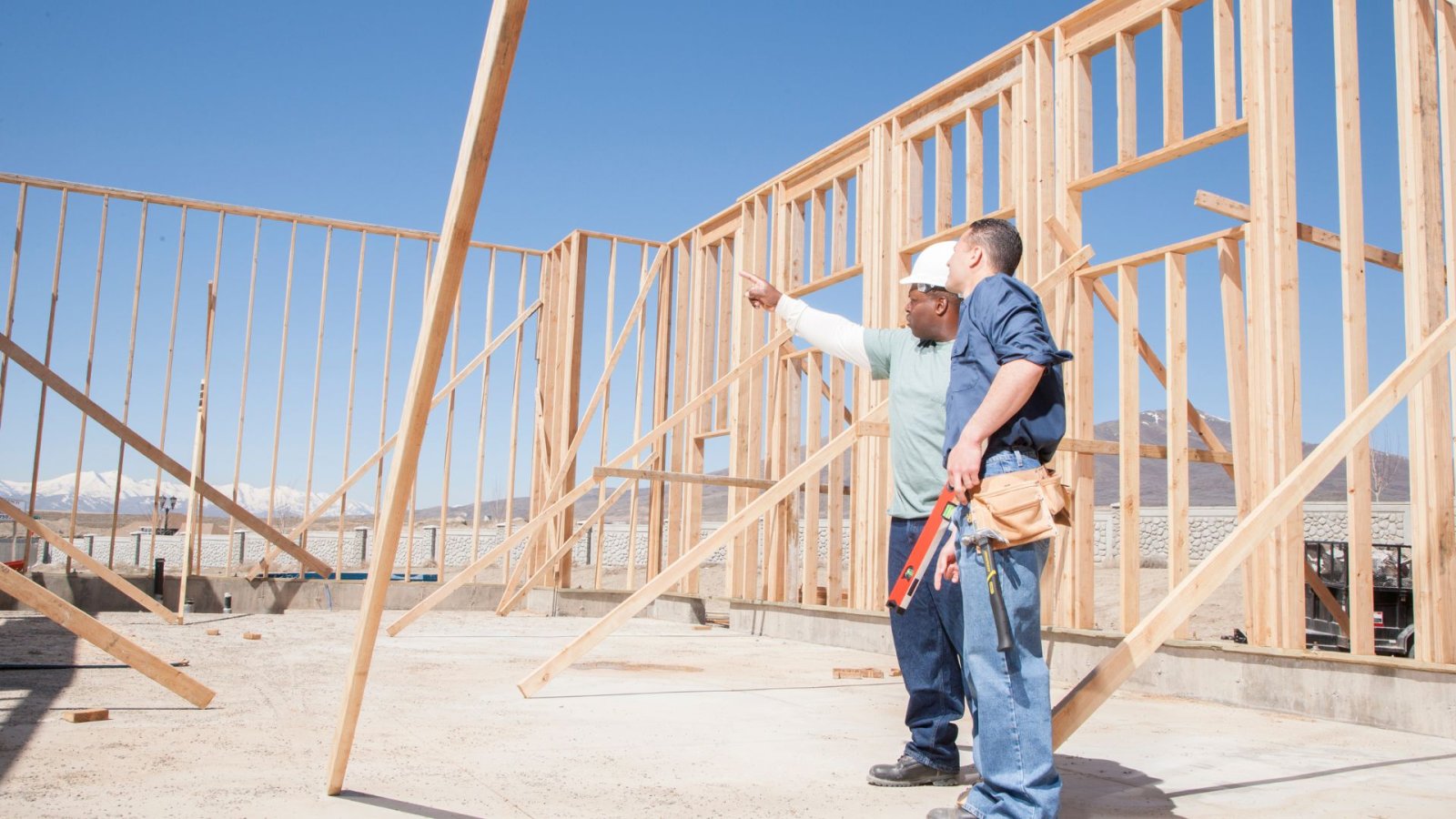
Builders risk insurance is property coverage written for a structure while it is being built, covering construction materials, work in progress, and tools stored on site.
Who buys the policy matters. For a deeper walkthrough of what this coverage includes, see our guide to builders risk insurance coverage.
Reading the quote like a contractor, not a shopper
A builders risk quote is not a single number to compare across insurers.
Replacement-cost limit. The limit should reflect the completed value of the structure, not the contract price alone.
Deductible. A percentage deductible (often 1% to 5% of the limit) behaves very differently from a flat dollar deductible when a loss occurs.
Exclusions and endorsements. Standard builders risk forms commonly exclude flood, earthquake, and earth movement unless endorsed.
Watch out: a policy written without soft-cost coverage and with a flood exclusion can leave a contractor with significant uninsured costs after a covered event.
When coverage should begin and end
Coverage should attach before the first delivery of materials to the site, not on the day framing starts. Materials sitting on the lot before the policy inception are uninsured. The policy should run through final completion and, ideally, include a grace period for the punch-list phase, because a loss during the final walkthrough is still a construction loss. If the project is a renovation rather than ground-up construction, confirm the policy covers the existing structure as well as the work in progress; many forms treat renovation differently and may require a specific endorsement.
Project details that change the quote
Insurers price builders risk on more than square footage. Ground-up construction, renovation, and addition projects carry different risk profiles. Occupancy matters: a building that will be occupied during construction needs an occupancy endorsement. Materials matter: wood-frame construction typically costs more to insure than steel or concrete. Subcontracting matters: a project with many trades on site has more theft and fire exposure than a single crew. And duration matters: a 12-month policy extended twice can cost more than a policy written for the actual 18-month schedule from the start.
Contractor General Liability Insurance: Protecting Against Third-Party Claims
General liability is the second pillar, and it answers a different question than builders risk. Where builders risk protects the structure, contractor general liability insurance protects you when a third party gets hurt or their property is damaged because of your work. A subcontracted crew knocks over a client’s fence. A visitor trips over a cord.
Many general contractors are required to carry GL to sign a contract, and many project owners ask for a certificate before work begins. The right limit depends on project size and contract terms.
Workers’ Compensation Insurance for Contractors: Covering the Crew
Workers’ compensation insurance for contractors covers medical bills and lost wages when an employee is injured on the job, and most states require it once you have employees. In construction, where falls, struck-by injuries, and equipment accidents are everyday risks, the exposure is real.
The coverage also protects you from lawsuits by injured workers, which is why general contractors often demand proof of workers’ comp from every subcontractor before work begins. For small operations, our overview of workers compensation coverage for small businesses explains how to structure a policy around a lean crew.
Contractor Insurance Cost: What Drives Your Premium and How to Manage It
Contractor insurance cost depends on your trade, payroll, revenue, project types, claims history, and the limits you choose, so two contractors with similar revenue can pay very different premiums. Carpenters, roofers, and excavators carry different risk profiles, and insurers price accordingly. A clean loss history lowers your premium; a single large claim can raise it for years.
Managing cost is mostly about accuracy and prevention. Report payroll honestly, classify workers correctly, document safety training, and raise deductibles only where you can absorb the hit. For a closer look at how liability pricing breaks down, read our general liability cost guide.
Comparing Policy Types: Coverage Highlights and Tradeoffs
No single policy covers a construction business, so the practical question is how the pieces fit together. Here is how the main options compare.
| Policy Type | What It Covers | Best For | Watch Out For |
|---|---|---|---|
| Builders risk | Structure, materials, work in progress | Every project under construction | Ends at completion; extensions cost extra |
| General liability | Third-party injury and property damage | All contractors | Excludes your own employees and your own property |
| Workers’ compensation | Employee injuries and lost wages | Contractors with employees | Required in most states; payroll audits |
| Commercial auto | Vehicles used for work | Crews with trucks and trailers | Personal auto policies often exclude work use |
| Tools and equipment | Stolen or damaged tools on site | Trades with high-value equipment | Sublimits on items stored in vehicles |
The tradeoff is always breadth versus premium. A wrap-up policy can consolidate coverage for an entire project, but it suits larger jobs where the owner or general contractor controls the site.
Coverage Coordination Among Contractor, Owner, and Subcontractors
Gaps appear when three parties assume someone else bought the policy. The owner thinks the general contractor insured the structure. The general contractor thinks the sub carried its own liability. The sub’s policy excludes the exact work being performed. Before work begins, collect certificates of insurance from every subcontractor, confirm the policy period matches the project duration, and check that additional insured endorsements name the right parties. Our guide to verifying contractor liability coverage walks through the documents to request and what each one should say.
Who should insure what
A clean allocation prevents both gaps and duplicate premium. The common pattern on a ground-up project is:
- Owner or general contractor: purchases the builders risk policy covering the structure, materials, and work in progress. Only one builders risk policy should respond to a given project; two policies covering the same structure create disputes at claim time, not extra protection.
- General contractor: carries general liability for third-party bodily injury and property damage arising from operations, plus workers’ compensation for its own employees.
- Each subcontractor: carries its own general liability, workers’ compensation, and commercial auto, and names the general contractor and owner as additional insureds where the contract requires it.
- Wrap-up programs: on larger projects, an owner-controlled or contractor-controlled insurance program (OCIP or CCIP) can consolidate general liability and workers’ compensation for all enrolled contractors. Wrap-ups reduce duplicate premium and close coordination gaps, but they suit larger jobs where the sponsor controls enrollment and site safety.
Certificates of insurance and additional-insured status
A certificate of insurance is evidence that a policy exists; it is not the policy itself. Request certificates before mobilization and again at renewal, because a sub’s policy can lapse mid-project. Confirm four things on each certificate: the named insured matches the contracting entity, the policy period covers the project schedule, the limits meet the contract requirement, and the additional insured endorsement is actually listed.
Watch out: a certificate means little if the sub’s policy carries a residential-only classification and the project is commercial; the gap often surfaces only after a claim.
A practical coordination process
- Read the contract’s insurance requirements before signing, and list every required limit, endorsement, and waiver.
- Confirm who is buying builders risk and obtain a copy of the policy, not just a certificate.
- Collect certificates from every subcontractor and verify additional insured and waiver of subrogation endorsements.
- Calendar every policy expiration date that falls within the project schedule and request renewals in advance.
- Keep a single coverage file for the project so that a claim can be reported to the correct insurer on the first attempt.
State and contract requirements vary
Workers’ compensation rules differ by state, including which employers must carry coverage and how subcontractors are treated. Check the applicable state rules with your agent or the relevant state agency. Contract insurance requirements also vary by owner and by project type. Before relying on a template, check the applicable state workers’ compensation agency rules and read the insurance section of the project contract line by line. Because project terms can change from one job to the next, roofing contractors should compare their contractor insurance requirements with the coverage each contract calls for.
How to Choose an Insurance Provider and Bundle Coverage
Choosing an insurance provider comes down to three tests: does the agent understand construction classifications, will they review your contracts and certificates, and can they bundle coverage without gaps. Ask how they handle subcontracted work and what happens at renewal when your payroll changes.
A simple process works:
- List every exposure: property under construction, third-party liability, employees, vehicles, tools.
- Gather your contracts and confirm the limits each one requires.
- Request quotes with identical limits so the comparison is fair.
- Ask each agent to identify gaps in your current coverage in writing.
- Bundle where it lowers cost, but never merge policies that cover different risks.
BIG Insurance provides customized policies across personal and business coverage, including commercial insurance options for contractors.
Get a Builders Risk Insurance Quote for Your Next Project
The right coverage sequence is straightforward: secure builders risk before materials arrive, carry general liability and workers’ comp for the crew, and coordinate certificates across every party on site.
BIG Insurance provides customized commercial insurance options and efficient service that respects your time. Get started with BIG Insurance and protect your next project from the first day of construction.
Ready to insure a project before the first delivery arrives? Reach out and we will review your exposure, confirm your limits, and identify the gaps in your current coverage. Contact our team to request a builders risk quote for your next build.
Frequently Asked Questions
How much does $1,000,000 in contractor insurance cost?
Pricing for $1,000,000 in contractor coverage depends on your trade, payroll, revenue, claims history, and the specific policies you bundle. General liability, workers’ comp, and builders risk are priced separately, so a single figure does not capture the full picture. For current pricing, request a quote from BIG Insurance on our website.
What types of insurance do new construction contractors need?
Most new construction contractors need builders risk insurance to protect the structure while it is being built, contractor general liability insurance for third-party bodily injury and property damage, workers’ compensation insurance for contractors with employees, and commercial auto for job-site vehicles. Tools and equipment coverage and an umbrella policy are worth considering as your operation grows. The right mix depends on whether you act as a general contractor or subcontractor and what your contracts require.
Does builders risk insurance cover contractors or only the building?
Builders risk insurance primarily covers the building under construction, including construction materials, work in progress, and covered property on site. It can also cover the contractor’s interest in the project, but it does not replace contractor general liability insurance, which handles third-party claims. Some policies include soft costs, debris removal, and temporary structures. Review the covered property and exclusions with your agent so you know exactly what is protected before work begins.
How can a new contractor get an insurance quote?
Start by gathering your business details: trade, years in operation, annual revenue, payroll, subcontractor use, and project types. Then contact an insurance agent who works with construction contractors and can request a builders risk insurance quote alongside general liability and workers’ comp. Be upfront about your experience level, because some carriers work with new contractors while others require a track record.
Do contractors need workers’ compensation insurance?
Workers’ compensation insurance for contractors is generally required once you have employees, and general contractors often require subcontractors to carry it before allowing them on site. Check your state’s rules. It covers medical costs and lost wages for work-related injuries. Even sole proprietors may need coverage to satisfy contract requirements or to protect themselves on physically demanding job sites. Check your state rules and your client contracts, then confirm limits with your agent before mobilizing.
