
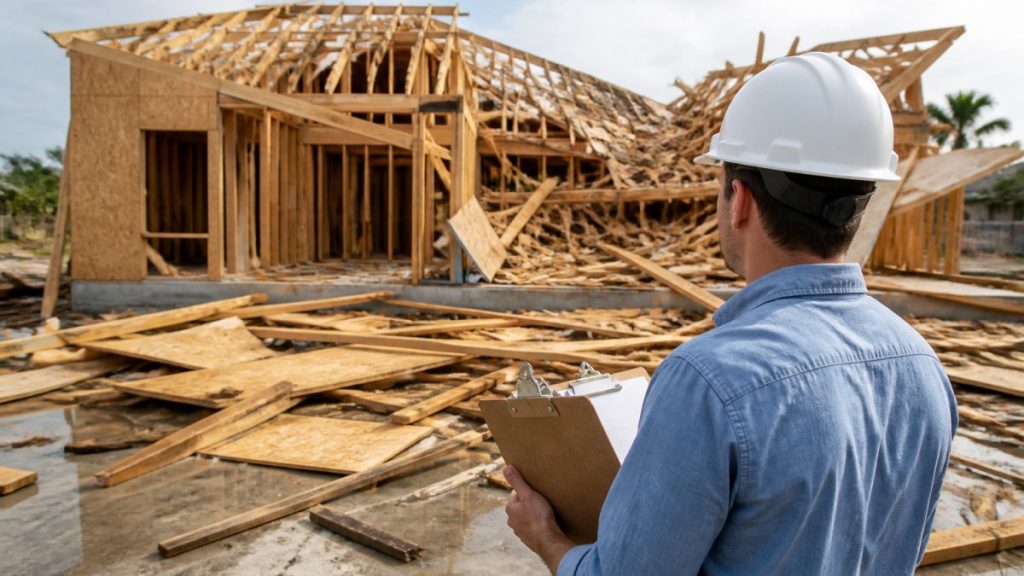
Table of Contents
- What Builders Risk Insurance Coverage Actually Protects
- What Builders Risk Insurance Does Not Cover
- Who Buys Builders Risk Insurance (And Who Should)
- Builders Risk Insurance Cost: What Drives Your Premium
- Builders Risk Insurance Policy Period: How Long Coverage Lasts
- Coverage by Project Phase: From Foundation to Final Walkthrough
- How to File a Claim and Avoid Costly Gaps
- Frequently Asked Questions
Last Updated: October 16, 2026
What Builders Risk Insurance Coverage Actually Protects
Builders risk insurance coverage is a specialized property policy that protects a building under construction, along with materials, supplies, and equipment on site, against damage during construction.
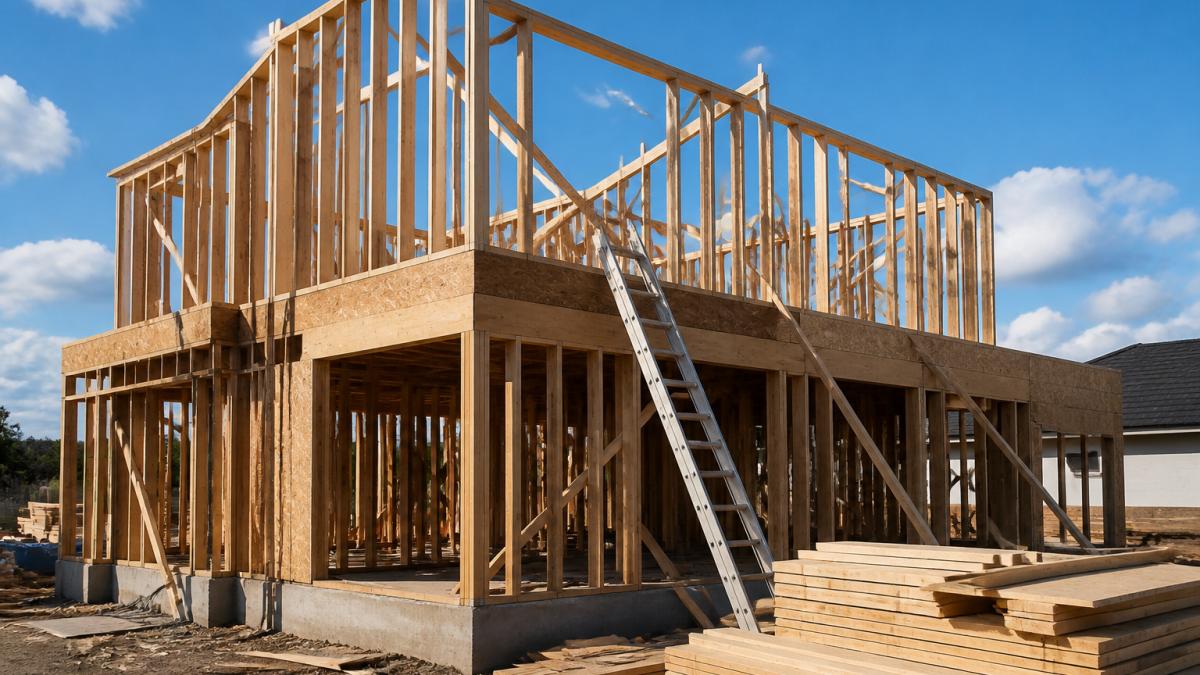
A project site holds a moving pile of value, lumber, windows, wiring, appliances, and tools arriving over weeks or months.
Coverage typically extends to:
- The structure itself as it rises, from foundation to finished frame
- Construction materials and supplies, both on-site and in transit
- Temporary structures such as scaffolding and job-site trailers
The policy usually pays replacement cost for new construction; renovations may settle at actual cash value depending on the carrier and the structure’s age.
How It Differs From a Standard Property Policy
A standard property policy covers a completed, occupied building. A builder’s risk policy covers a structure that is unfinished, unoccupied, and constantly changing.
Three practical differences stand out:
- The insured value changes. Coverage limits are set to the completed project value, but the exposure grows as construction progresses.
- The named insured is often flexible. Owners, general contractors, and subcontractors can all be listed on one policy.
- The policy term is tied to the project. Coverage ends at completion, occupancy, or the policy expiration date, whichever comes first.
That last point trips up contractors most: if your project runs long, the policy can expire while the building still needs protection.
What Builders Risk Insurance Does Not Cover
The gaps in a builder’s risk policy cause more financial pain than the premium ever does. Knowing what builders risk insurance does not cover, and which exclusions can be endorsed back versus which need a separate policy, is the fastest way to avoid a denial. Common exclusions fall into three groups:
Exclusions you can usually endorse back onto the policy
- Flood and surface water. Standard forms exclude flood, but many carriers offer a flood endorsement. In a Special Flood Hazard Area with a federally backed mortgage, the lender typically requires flood coverage; a separate NFIP or private flood policy may be cleaner.
- Earth movement. Earthquake, landslide, and sinkhole are excluded on most forms. In seismic zones, an earthquake endorsement or stand-alone difference-in-conditions (DIC) policy is the standard fix.
- Theft of materials in transit. On-site theft is often covered, but in-transit property may need a transit or cargo endorsement, especially for high-value loads like copper wire, appliances, or switchgear.
Exclusions that require a different policy altogether
- Employee theft and dishonest acts. Dishonest acts by anyone on your payroll are excluded; employee dishonesty coverage is a separate crime policy.
- Employee injuries. These belong to workers’ compensation, not property coverage. No builder’s risk endorsement pays for a framer who falls off a ladder.
- Third-party liability. A builder’s risk policy covers property, not injuries or damage to others’ property. General liability handles an injured delivery driver or damage to a neighbor’s fence.
Exclusions that are really about construction defects
- Faulty workmanship. This exclusion generates the most disputes. The cost to tear out and redo defective work is excluded; resulting damage to other covered property may be covered. If a subcontractor installs a roof incorrectly and it leaks, the roof redo is excluded, but water damage to drywall, flooring, and cabinetry below may be covered, two different claims, and mixing them up delays payment.
- Design errors and omissions. Architect or engineer errors are typically excluded from the property form and belong to professional liability coverage.
The faulty workmanship exclusion catches people off guard because the two halves of the claim are handled by different adjusters under different coverage grants. Report both the defective work and the resulting damage in the same first notice of loss, and let the carrier sort out which portion is payable. Splitting the report across two calls is a common way to create a coverage dispute that did not need to exist.
Mitigation and risk controls that reduce exposure
Carriers price and sometimes condition coverage on site controls that address excluded perils:
- Fencing, lighting, and a monitored alarm reduce theft exposure and can lower the premium.
- Documented key-control and material-staging procedures limit employee and subcontractor theft.
- Temporary heat and freeze protection reduce water damage from burst pipes during winter framing.
A practical review checklist
Before the policy binds, walk through these questions with your agent:
- Which exclusions on this form can be endorsed, and at what cost?
- Does the project sit in a flood zone or seismic zone that triggers a lender requirement?
- Is property in transit covered, and at what limit?
- Is there a separate crime or employee dishonesty policy in place?
- Does the general liability policy respond to third-party injury and property damage?
- Does the construction contract assign responsibility for defective work and resulting damage clearly?
Treat the exclusions page as a shopping list, not a dead end. Most of the gaps that sink construction claims are closable with an endorsement or a companion policy, and the ones that are not closable are the ones you need to manage with site controls and contract language.
Who Buys Builders Risk Insurance (And Who Should)
Who buys builders risk insurance depends on the contract, but whoever holds the financial interest in the structure during construction should be protected, usually the property owner, though general contractors often carry it and pass the cost through.
The policy can name multiple parties:
| Party | Typical Role on the Policy |
|---|---|
| Property owner | Holds the primary financial interest |
| General contractor | Manages the project and often purchases coverage |
| Subcontractors | Named as additional insureds when required |
| Lender | Listed when financing requires proof of coverage |
Before signing a construction contract, check who is responsible for insuring the work in progress. Duplicate policies waste money, and a gap between two policies is far worse than either problem.
Renovations deserve special attention. When remodeling an occupied building, the existing property policy may cover the structure while the builder’s risk policy covers the new work. Overlap and gaps both happen, so read both policies side by side.
Builders Risk Insurance Cost: What Drives Your Premium
Builders risk insurance cost varies widely because the premium is built from each project’s specific risk profile, not a flat rate table.
How the premium is actually calculated
Most carriers start with a rate per $100 of completed project value, then apply credits and debits for the specific risk characteristics. A simplified version of the math looks like this:
- Completed project value: $1,000,000
- Base rate: $0.30 per $100 of value
- Base premium: $3,000
Those figures are illustrative, not quoted.
Factors that move the number
- Project value. The limit tracks the completed structure, so higher-value projects pay more even at the same rate.
- Construction type. Frame prices higher than masonry, steel, or concrete because it burns and is more wind-vulnerable.
- Occupancy and use. Restaurants, habitational projects, and occupied renovations carry more risk than storage or shell buildings.
Deductibles: the lever most owners get wrong
A builder’s risk deductible is usually a flat dollar amount or a percentage of insured value, and the percentage form is where surprises happen.
Ask your agent to quote the same project at two or three deductible levels side by side. The premium savings from a higher deductible are easy to see, but the out-of-pocket exposure at claim time is the number that actually matters, and it is the one most owners never calculate.
Underinsurance and the coinsurance trap
Underinsurance is the quiet killer of construction claims.
Two habits prevent this:
- Set the limit to the full completed value, including soft costs if the form allows. Do not insure only the hard construction cost if the policy is meant to cover the whole project.
- Report value changes as they happen. If change orders push the completed value above the original limit, request an increase before the loss, not after.
A realistic cost example
Because pricing depends on so many project-specific variables, we quote each project individually rather than publishing generic rates.
Do not shop builder’s risk on premium alone. Compare the rate basis, the deductible structure, the coinsurance clause, and the reporting requirements. Two quotes at the same premium can leave you with very different out-of-pocket exposure at claim time.
Builders Risk Insurance Policy Period: How Long Coverage Lasts
The builders risk insurance policy period runs the length of the construction schedule, ending at completion, occupancy, or expiration, whichever comes first. Most policies are written for six to twelve months, with extensions available if the build runs long.
Three events end coverage:
- Completion of the structure as defined in the policy
- Occupancy or use of the building, even partial
- Expiration of the policy term
Set a calendar reminder 60 days before your policy expires. Extending coverage is routine when you ask early, but a lapse after expiration means starting a new policy with a fresh inspection and a gap in protection.
Some carriers also require completed value reporting, you report the final project value so the premium can be adjusted. Skipping that step can create a coinsurance penalty at claim time.
Coverage by Project Phase: From Foundation to Final Walkthrough
Coverage scenarios shift as a project moves through phases, and ground-up construction and renovation are underwritten differently because the exposure differs.
Foundation and framing. Theft is the leading concern.
Enclosed and rough-in. Once closed in, water damage and fire dominate. Sprinkler systems and temporary heat add new exposures.
Final walkthrough. Coverage typically ends at completion or occupancy.
For renovations, the existing structure is usually insured under the owner’s property policy while the builder’s risk policy covers materials and new work.
How to File a Claim and Avoid Costly Gaps
Claims on construction projects succeed or fail on documentation. These are the steps we walk contractors through:
- Report the loss immediately. Call your agent the same day, most policies require prompt notice, and delay invites questions.
- Secure the site. Board up, tarp, and fence to prevent further damage. Mitigation costs are often recoverable, but only if you act.
- Document everything. Photograph and video the damage before cleanup, and keep damaged materials until the adjuster sees them.
- File a police report for theft or vandalism. A report number is standard documentation.
- Keep records current. Maintain a running inventory of materials, delivery receipts, and subcontractor schedules.
- Track the claim in writing. Log every call, email, and adjuster visit with dates and names.
FEMA guidance on protecting buildings from disaster damage offers useful checklists for securing a site after a loss.
The most common claim mistake is starting repairs before the adjuster inspects the damage. Once the evidence is gone, the carrier can reduce or deny the payout. Document first, repair second.
Contract language matters too. Your construction contract should state who carries the builder’s risk policy, the coverage limit, and how claims are handled. Vague wording invites owner-contractor disputes at the worst possible moment.
Construction risk does not wait for paperwork. When a project is framed and the weather turns, the difference between a covered loss and an uncovered one comes down to the policy you put in place before the first nail went in. BIG Insurance specializes in builders risk and contractor coverage, with customized policies built around your project value, timeline, and trade.
Frequently Asked Questions
Do I really need builders risk insurance?
If you are building a new structure or doing a major renovation, builders risk insurance is often essential. A standard homeowners or commercial property policy typically excludes structures under construction. Without it, a fire, theft, or windstorm could leave you paying for materials and labor out of pocket. Many lenders and general contractors also require proof of coverage before work begins.
What does builders risk insurance not cover?
Common exclusions include employee theft, faulty workmanship or design errors, wear and tear, and damage from earthquakes or floods unless specifically endorsed. Liability for injuries to workers or third parties is also excluded; that requires a separate general liability policy. Always review the policy exclusions list, because coverage varies by insurer and project type.
Who typically buys builders risk insurance?
Property owners, general contractors, and developers usually purchase builders risk insurance. On smaller projects, the homeowner may buy it. On larger commercial jobs, the general contractor often secures the policy and names the owner and subcontractors as additional insureds. The contract between parties should clearly state who is responsible for obtaining coverage.
How much does builders risk insurance cost?
Cost depends on project value, construction type, location, and duration. Insurers typically charge a rate per $100 of completed value. For an accurate quote, contact BIG Insurance with your project details.
How long does builders risk insurance last?
The policy period is typically set for the expected duration of construction, often 6 to 12 months. It can be extended if the project runs longer. Coverage usually ends when the project is completed and occupied, or when the policy term expires, whichever comes first. Some policies include a grace period for final inspections.
Does builders risk insurance cover materials in transit or stored off-site?
Many builders risk policies include coverage for materials in transit and while stored off-site at a temporary location. However, limits and conditions apply. For example, coverage may be capped at a certain percentage of the total policy limit. Check your policy or ask your agent to confirm these extensions are included.